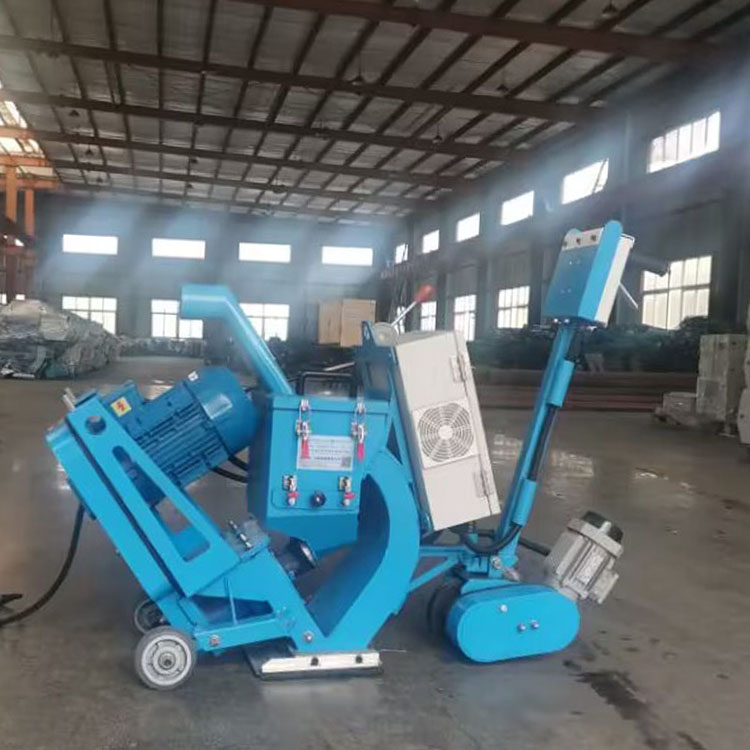
Grinding is to "smooth the surface," while shot blasting is to "create a texture that grips the coating." For garage floors subjected to daily traffic, turning, and braking, a smooth base fails to hold the coating, whereas the rough texture produced by shot blasting ensures proper adhesion
Reason 1: Adhesion is not a single grade; it directly determines whether the floor coating will peel or delaminate
After shot blasting, the surface will be covered with densely distributed pits, and the peaks and valleys of these pits increase the surface area by several times compared to grinding, significantly enhancing the mechanical interlocking force between the coating and the surface. Technical data directly states that shot blasting is 2 to 3 times more permeable than grinding. Ordinary grinding machines leave arc marks, often leaving low-lying areas ungrounded; the matte surface formed by shot blasting is uniform and fine, allowing the coating to adhere as if embedded.
The garage floor is subjected to repeated vehicle rolling, shearing forces from steering wheel turns, and impacts from slopes—resulting in poor base adhesion, rendering expensive surface layers ineffective. The advantage of shot blasting in this aspect cannot be compensated by grinding techniques through construction skills.
Reason two: High efficiency, particularly suitable for large continuous areas like garages
Garage flooring typically covers large areas and requires concentrated construction periods. Shot blasting machines can operate continuously at a steady speed, far exceeding the efficiency of manual grinding and are suitable for large-scale one-time processing. Although grinders offer flexibility, their sequential grinding and repeated corner treatment can extend the construction period for large garage areas.
For customers, a shorter construction period means the garage can be put into use a day earlier, which is a tangible benefit.